
Slip Disc Treatment in Jumeirah 1, Dubai
Physiotherapy-led care for slipped, herniated and bulging discs, with a GP and X-ray in the same clinic
RamaCare Polyclinic treats slipped and herniated discs at 12 Al Dhiyafah Road, Jumeirah 1, Dubai. Your first visit is a disc assessment by our DHA-licensed physiotherapist. If needed, our GP can prescribe pain medication, arrange an X-ray in the clinic and refer you for an MRI or to a spine specialist. Most people improve without surgery. Open every day, 10am–10pm.
RamaCare Patient Care
DHA-licensed polyclinic in Jumeirah 1 with physiotherapy, a GP and in-house X-ray under one roof.
Introduction
What Is a Slip Disc?
"Slip disc" is an everyday name for several disc problems. Your assessment will tell you which one applies:
Herniated disc
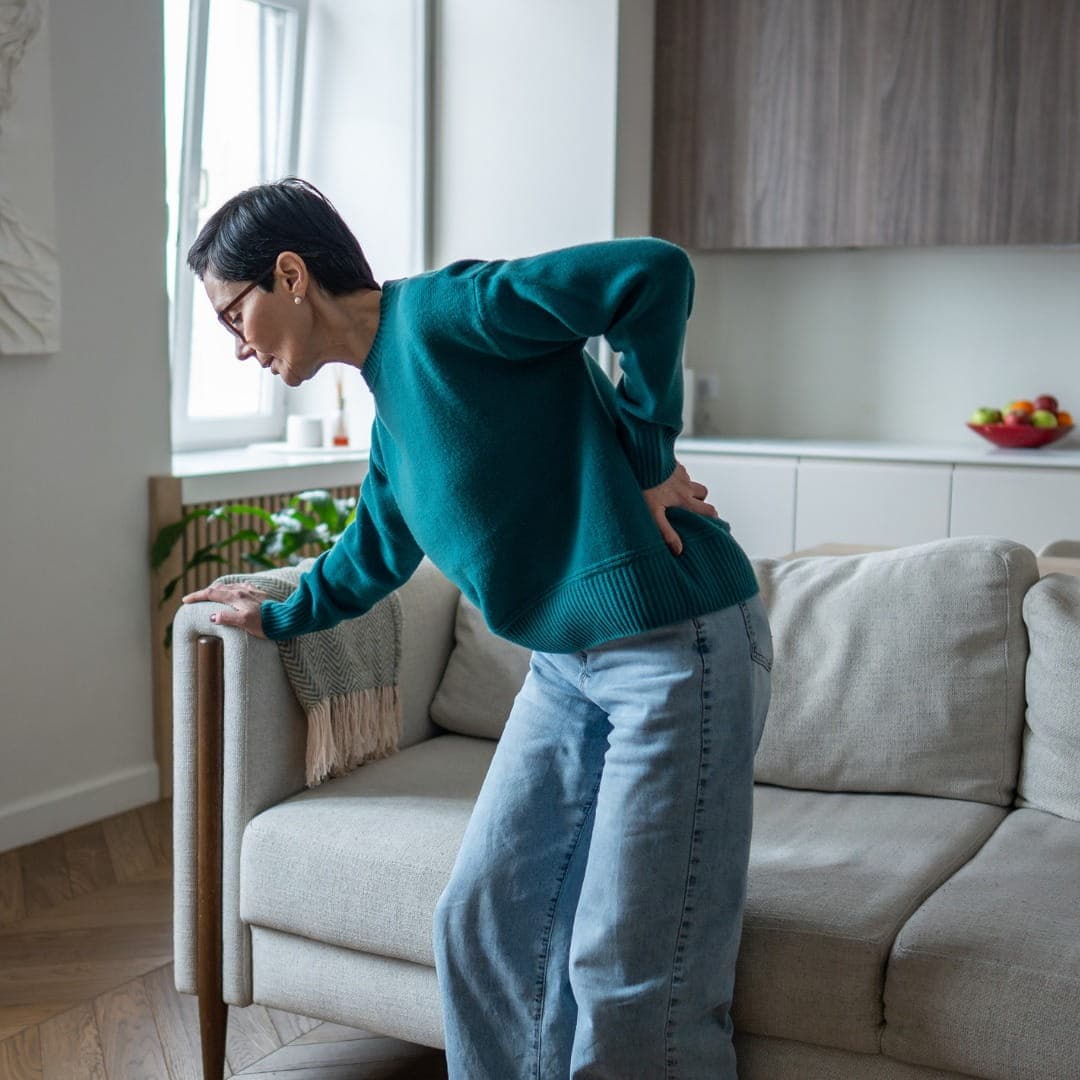
A herniated disc can press on a nearby nerve root.
How a Spinal Disc Works
Lower Back (Lumbar) vs. Neck (Cervical) Disc
Common Misconceptions
Signs & Symptoms
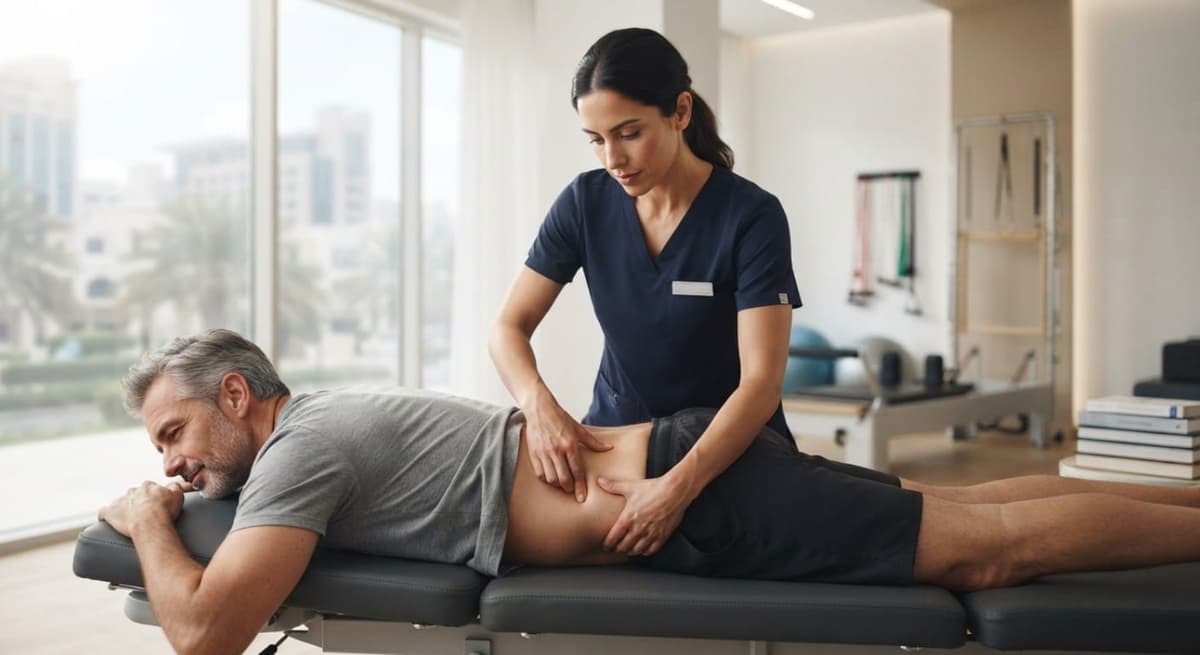
Physiotherapist Treating a Patient with a Slip Disc
Hands-on treatment helps ease muscle spasm and stiffness.
Clinical Guidance
Tick any symptoms that apply to you to see when to book an assessment.
Causes
A slipped disc usually comes from a mix of factors:
Age-related disc changes
Discs lose water and flexibility over time.
Lifting with poor technique
Especially bending and twisting at the same time.
Long hours sitting or driving
Sustained pressure on the lower back discs.
Poor posture at a desk or phone
Adds load to the neck and lower back.
Weak core and back muscles
Less support for the spine.
Extra body weight
More load on the lumbar discs.
Smoking
Linked to faster disc degeneration.
Sudden injury
A fall, sports injury or road accident.
Who Is More Likely to Get a Slipped Disc?
Slipped discs are most common between 30 and 50 years of age. Risk is higher for:
Office workers
Long hours sitting, often with poor posture.
Drivers
Long periods sitting with vibration.
People who lift at work
Repeated bending and lifting.
Gym-goers and athletes
Heavy lifting or twisting sports.
Pregnant women
Posture changes and extra load on the spine.
Smokers
Discs tend to degenerate faster.
When Is a Slipped Disc an Emergency?
Loss of bladder or bowel control with back pain can be cauda equina syndrome, which needs emergency surgery. Do not wait for a clinic appointment. For other severe or worsening symptoms, RamaCare's GP can see you the same day and refer you urgently if needed.
Disc Assessment at RamaCare
Your disc assessment in Jumeirah 1 usually includes:
History
How the pain started, where it spreads, and what eases or worsens it.
Movement assessment
How bending, sitting, standing and walking affect your symptoms.
Nerve tests
Reflexes, sensation and muscle strength in the legs or arms.
Nerve tension tests
Such as the straight leg raise, which can show nerve irritation from a lumbar disc.
GP review
Pain medication if needed and a check for other causes.
X-ray in the clinic
Shows bone alignment and rules out other bone problems. It does not show the disc itself.
MRI by referral
MRI shows the disc and nerves. It is usually needed only if symptoms are severe, not improving, or surgery is being considered.
How We Treat a Slipped Disc at RamaCare
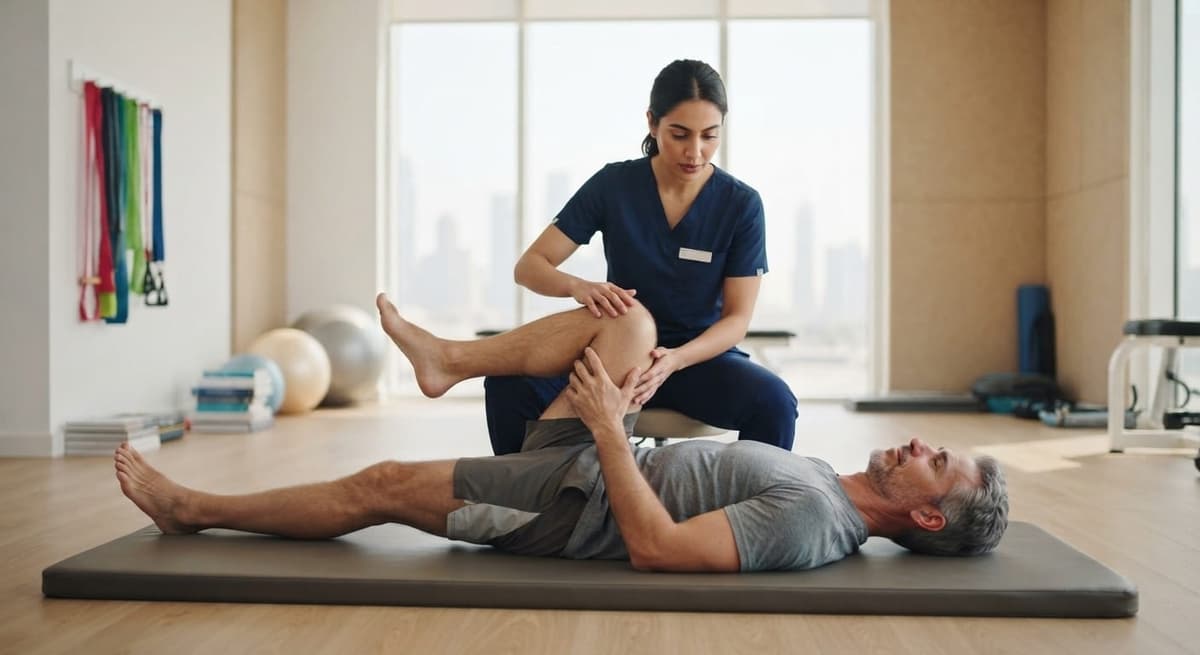
Guided Stretching Exercises
Exercises are chosen from your assessment.
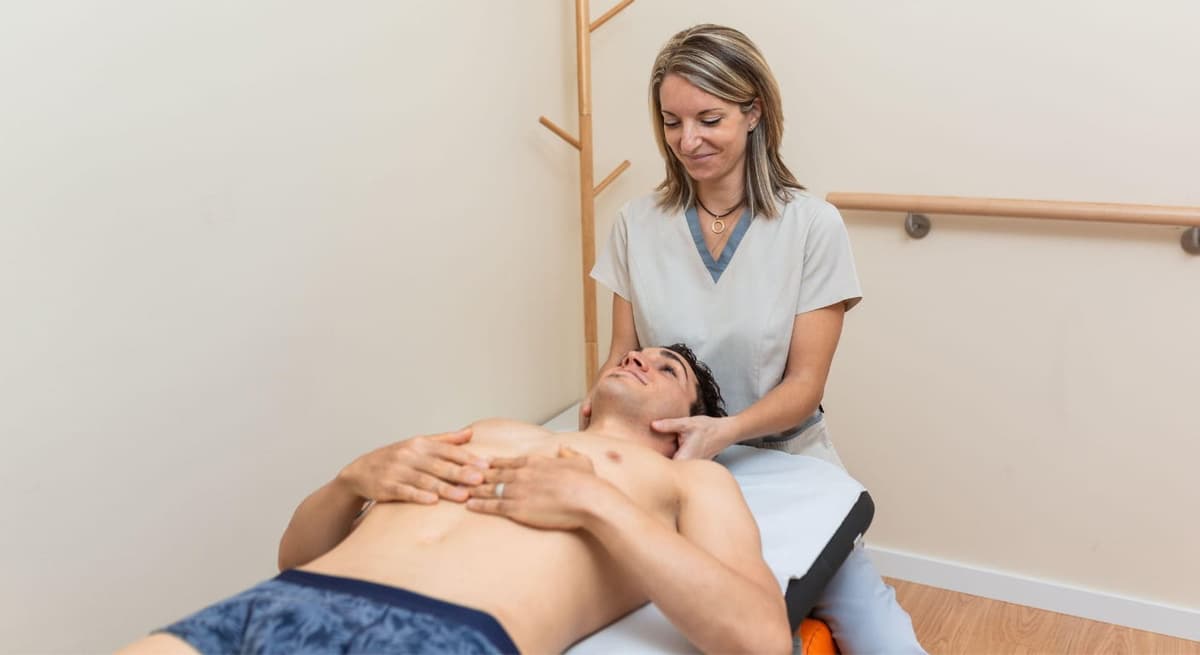
Manual Therapy Session
Manual therapy supports movement while you rebuild strength.
Exercise Therapy
Core and Back Strengthening
Manual Therapy
Posture and Desk Advice
Activity Guidance
Electrotherapy (TENS)
Dry Needling
Kinesio Taping
Pain Medication from Our GP
Referral When Needed
Every plan starts with an assessment. Results vary between people, and no treatment outcome is guaranteed.
Physiotherapy for Slip Disc
Physiotherapy helps a slipped disc in several ways:
Ease pain
Positions, movements and hands-on techniques that settle the nerve
Restore movement
Gradually return to bending, sitting and walking
Improve flexibility
Loosen tight muscles around the spine and hips
Strengthen
Build core and back support for daily loads
Prevent recurrence
Lifting technique, posture and a home programme
Return to normal life
Back to work, driving, exercise and sport
Recovery Timeline
Choose the option closest to your situation to see a typical timeline.
Often 6 to 12 weeks
When a nerve is irritated, recovery commonly takes 6–12 weeks. Many people improve steadily over this time.
Recovery also depends on:
Benefits of Early Treatment
Your Care Pathway
What a typical course looks like at RamaCare:
Disc assessment
Symptoms, movement and nerve tests.
GP and X-ray if needed
Medication, X-ray or MRI referral on the same visit.
Your plan
Goals and a treatment plan based on the findings.
Physiotherapy sessions
Progressive treatment and exercise.
Home exercises
A short programme to do between visits.
Review
Regular re-testing, with referral if progress is not as expected.
Prevention
Lifting, posture and fitness habits to keep the back healthy.
Meet Our DHA-Licensed Expertise
Highly qualified doctors with decades of combined experience, committed to your healing journey with expertise, compassion, and authentic care.

Jeena Mathew
BPT, MPT (Physiotherapy)
Musculoskeletal Physiotherapy
8+ Years ExperienceKey Expertise
- Back Pain & Sciatica: Manual therapy and strengthening
- Neck Pain: Joint mobility and posture advice
- Shoulder & Knee Pain: Rehabilitation

Dr. Sahar Zomorrodi
DHA-Licensed General Practitioner | Diploma from American Aesthetic Academy
General Practice & Aesthetic Medicine
14 Years Experience | DHA LicensedKey Expertise
- Holds a diploma from the American Aesthetic Academy
- Skilled in non-surgical cosmetic procedures, skin rejuvenation, and anti-aging treatments
- Committed to delivering safe, personalized, and results-driven care
Why Choose RamaCare for a Slipped Disc in Jumeirah 1?
What you get at our Jumeirah 1 clinic:

Strength and control exercises help prevent another episode.
Support Services
We also treat related problems such as sciatica, back pain, neck pain and cervical spondylosis.
Frequently Asked Questions
Browse our answers to popular questions regarding Slipped Disc Physiotherapy in Jumeirah 1, Dubai in Dubai.

Content Reviewed by Jeena Mathew
Musculoskeletal Physiotherapy Specialist
BPT, MPT (Physiotherapy) · DHA Licensed Physiotherapist • 8+ Years Clinical Experience
Slipped Disc Physiotherapy in Jumeirah 1, Dubai | RamaCare
Book a disc assessment in Jumeirah 1. Open every day 10am–10pm, with same-day appointments when slots are free.
Get In Touch
Call Us
+971 04 286 2006
Chat with us instantly
query@ramacarepolyclinic.com
Clinic Address
12 Al Dhiyafah Rd - Jumeirah Terrace Building,
Ground Floor, Jumeirah 1 - Dubai
Clinic Hours
Request Appointment
DHA Licensed
Certified Facility
Open Daily
10am – 10pm
Personalized Plans
Built Around Assessment
4.8/5 Google Rating
217 reviews
Slip Disc Treatment in Jumeirah 1
Treatment depends on an individual assessment. Recovery varies from person to person, and no treatment outcome is guaranteed.