
Sports Injury Treatment & Rehabilitation in Jumeirah 1, Dubai
Assessment, X-ray and rehab in one visit, from first injury to return to sport
RamaCare Polyclinic treats sports injuries at 12 Al Dhiyafah Road, Jumeirah 1, Dubai. If you have just been injured, you can see our GP, have an X-ray and start physiotherapy in the same visit. Our DHA-licensed physiotherapist then builds a rehab plan for your sport, using exercise, manual therapy, shockwave, kinesio taping, dry needling or deep tissue sports massage, and tests you before you return to play. Open every day, 10am–10pm.
RamaCare Patient Care
DHA-licensed polyclinic in Jumeirah 1 with sports physiotherapy, a GP and in-house X-ray under one roof.
Introduction
What Is Sports Injury Rehabilitation?
Sports injury rehabilitation is a structured programme that restores movement, strength and control after an injury and prepares you to return to your sport safely.
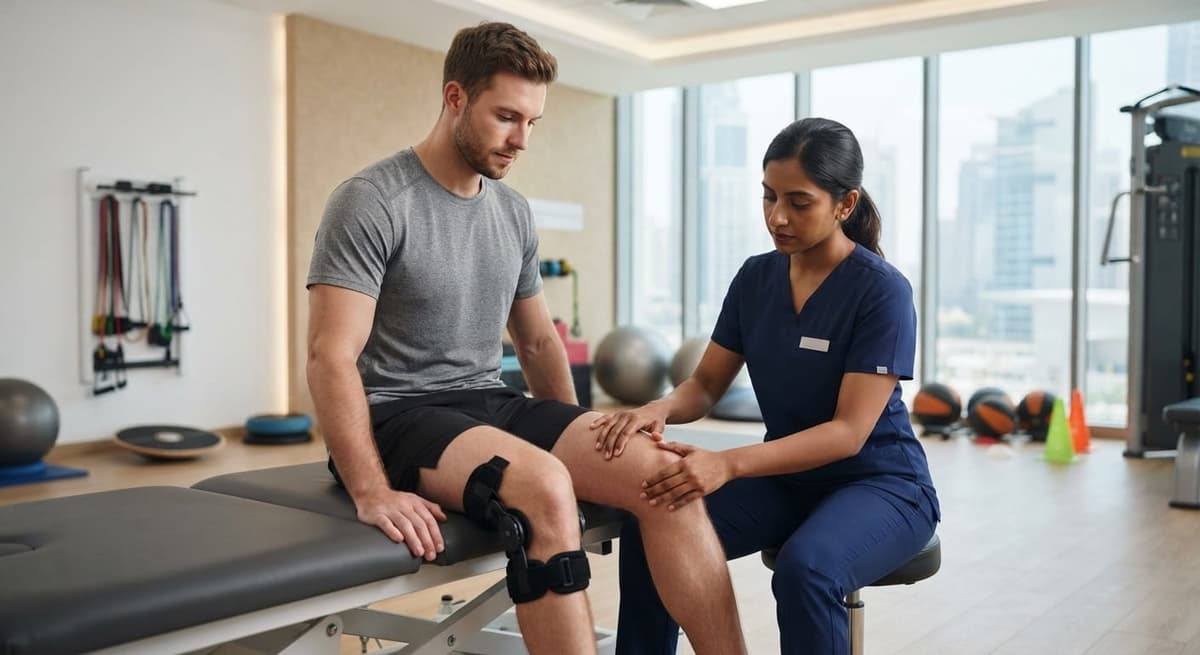
Assessment checks the injured tissue and how the limb moves under load.
Treatment vs. Rehabilitation
Evidence-Based Return to Sport
Fixing Why It Happened
Signs & Symptoms
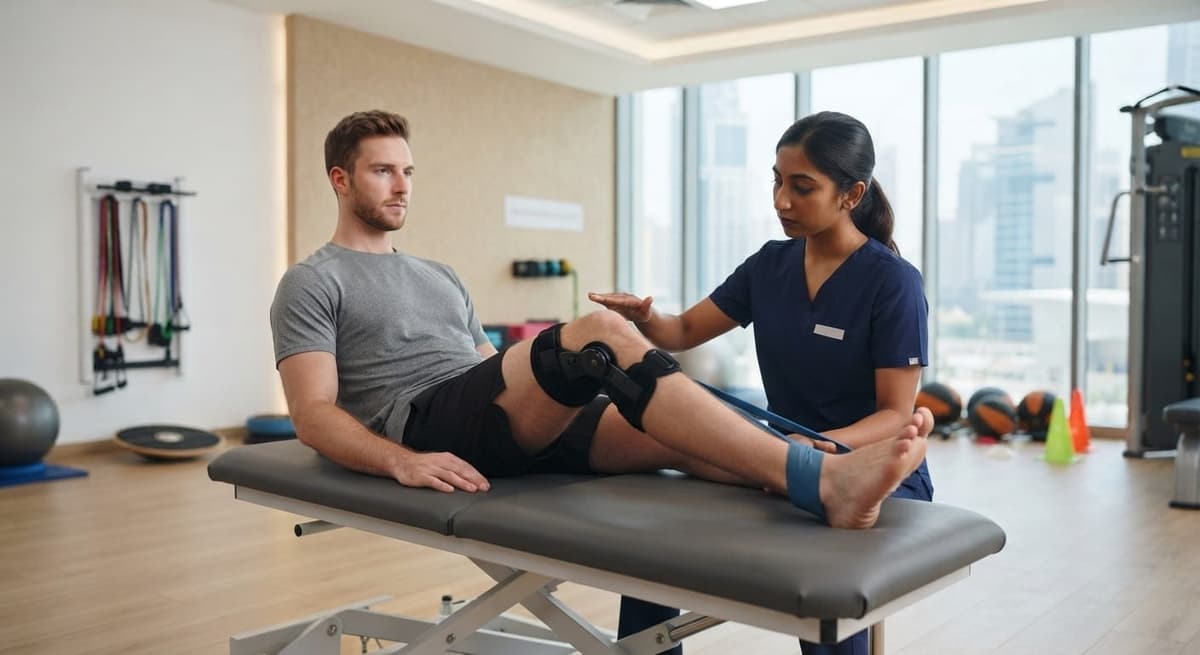
ACL rehabilitation exercise session
After a knee ligament injury, rehab focuses on thigh strength and knee control.
Clinical Guidance
Tick any symptoms that apply to you to see when to book an assessment.
Causes of Sports Injuries
Most sports injuries come from one or more of these:
Sudden jump in training
Too much load too soon, or too little recovery between sessions.
Poor technique
Movement patterns that overload joints and tendons.
Skipping the warm-up
Tissues are less ready for fast, explosive movement.
Muscle weakness or imbalance
Extra strain falls on ligaments and tendons.
Limited flexibility
Restricted movement raises the risk of strains.
Contact and falls
Collisions, tackles and awkward landings.
Footwear and surfaces
Worn shoes or a change of surface.
Repetitive movement
Builds up into overuse tendon problems.
Returning too early
Going back before strength and control have recovered.
Common Injuries by Sport
Each sport tends to load the body in its own way:
Running
Shin splints, runner's knee, Achilles pain and plantar fasciitis.
Football
Ankle sprains, hamstring strains, groin pain and knee ligament injuries.
Padel and tennis
Tennis elbow, calf strains, shoulder pain and ankle sprains.
Gym and weightlifting
Shoulder pain, lower back strain and knee pain.
Cycling
Knee pain, lower back pain and neck stiffness.
Cricket and golf
Lower back and shoulder injuries from rotation and throwing.
Swimming
Shoulder overuse and rotator cuff problems.
When Should You Get a Sports Injury Checked?
For a new injury, RamaCare's GP can examine you and arrange an X-ray on the same visit, then physiotherapy can start. If a fracture, complete tear or other injury needs a specialist, we refer you to an orthopaedic or sports medicine doctor.
Assessment and Sports Testing at RamaCare
Your first visit in Jumeirah 1 usually includes:
Injury history
How the injury happened, your sport, training load and past injuries.
GP check and X-ray when needed
For new injuries, the GP can examine you and arrange an in-house X-ray on the same visit.
Physical examination
Hands-on assessment of the injured muscle, tendon or ligament.
Range of motion
How far the joint moves compared with the other side.
Strength testing
Comparing strength between the injured and uninjured sides.
Balance and control
Single-leg balance and movement control, especially after knee and ankle injuries.
Functional and hop tests
Squat, lunge, hop and landing tests to see how the limb copes with load.
Sport-specific movement
Running, cutting, throwing or swinging movements relevant to your sport.
How We Treat Sports Injuries at RamaCare
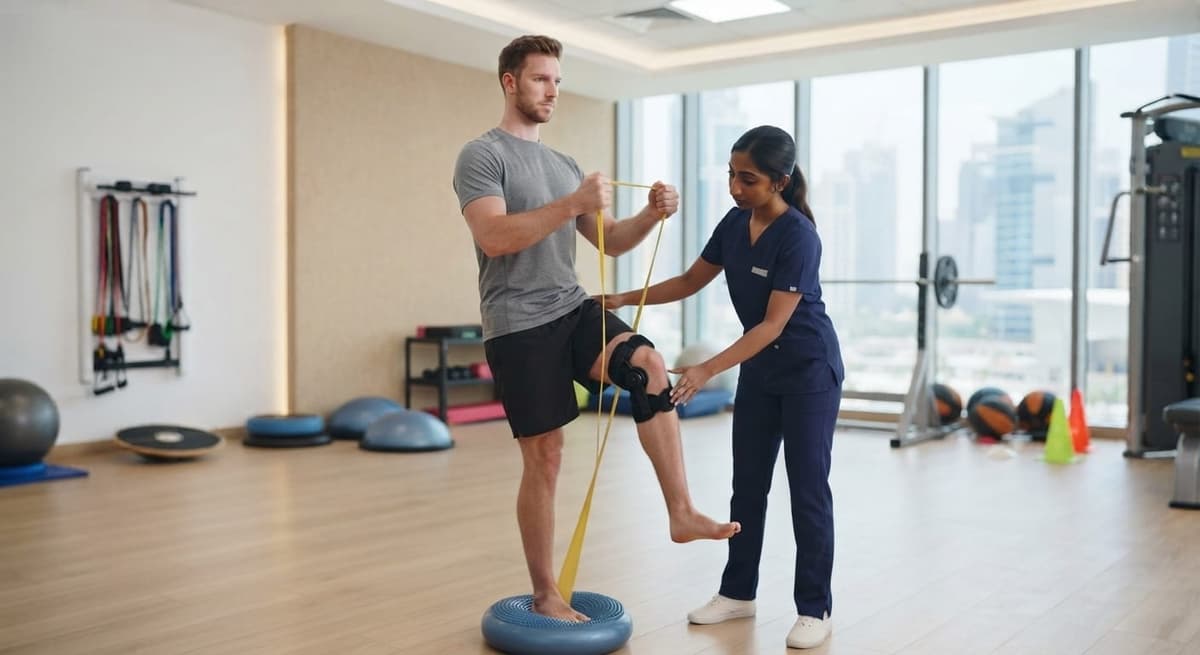
Balance and strength training for sports recovery
Balance training helps prevent repeat ankle and knee injuries.
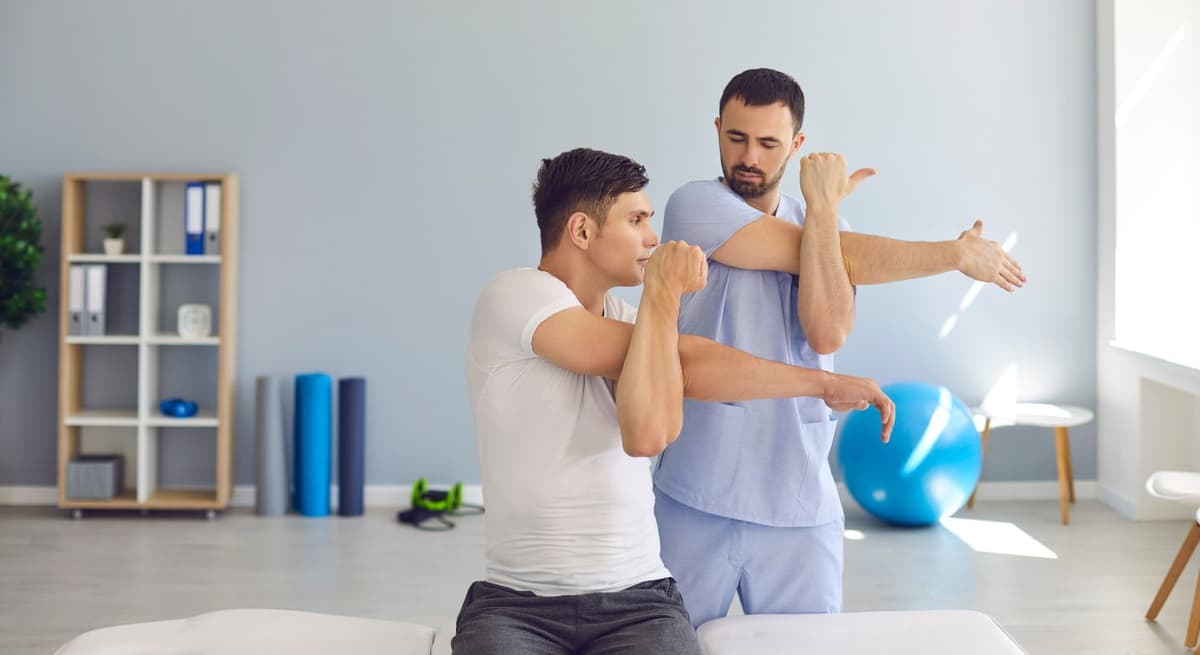
Manual therapy for shoulder sports injury
Hands-on treatment helps restore shoulder movement.
Exercise Rehabilitation
Manual Therapy
Deep Tissue Sports Massage
Shockwave Therapy
Kinesio Taping
Dry Needling
Cupping
Electrotherapy and Ultrasound
Balance and Neuromuscular Training
Sport-Specific Training
Return-to-Sport Testing
Every programme starts with an assessment. We do not use fixed packages for sports injuries.
Injury Prevention Tips
Simple habits that lower your risk of injury:
Warm up properly
Before every session or match
Build strength
Include strength training each week, not only cardio
Increase load gradually
Avoid big jumps in distance, weight or sessions
Work on technique
Ideally with feedback from a coach
Plan recovery days
Give tissues time to adapt
Recovery Timeline
Choose the option closest to your injury to see a typical timeline.
Often 4 to 8 weeks
Partial tears usually need 4–8 weeks of progressive loading before full training.
Recovery depends on:
Benefits of Sports Injury Rehabilitation
Rehabilitation Phases
Most sports rehab follows these stages:
Phase 1: Protect and Settle
Manage pain and swelling and protect the healing tissue.
Phase 2: Restore Movement
Regain full range of motion.
Phase 3: Build Strength
Progressive resistance to rebuild lost strength.
Phase 4: Functional Training
Squats, lunges, hops and landing with good control.
Phase 5: Sport-Specific Training
Sprinting, cutting, throwing or swinging for your sport.
Phase 6: Return-to-Sport Testing
Tests confirm you are ready before full training and competition.
Meet Our DHA-Licensed Expertise
Highly qualified doctors with decades of combined experience, committed to your healing journey with expertise, compassion, and authentic care.

Jeena Mathew
BPT, MPT (Physiotherapy)
Musculoskeletal Physiotherapy
8+ Years ExperienceKey Expertise
- Back Pain & Sciatica: Manual therapy and strengthening
- Neck Pain: Joint mobility and posture advice
- Shoulder & Knee Pain: Rehabilitation

Dr. Sahar Zomorrodi
DHA-Licensed General Practitioner | Diploma from American Aesthetic Academy
General Practice & Aesthetic Medicine
14 Years Experience | DHA LicensedKey Expertise
- Holds a diploma from the American Aesthetic Academy
- Skilled in non-surgical cosmetic procedures, skin rejuvenation, and anti-aging treatments
- Committed to delivering safe, personalized, and results-driven care
Why Choose RamaCare for Sports Injuries in Jumeirah 1?
What you get at our Jumeirah 1 clinic:
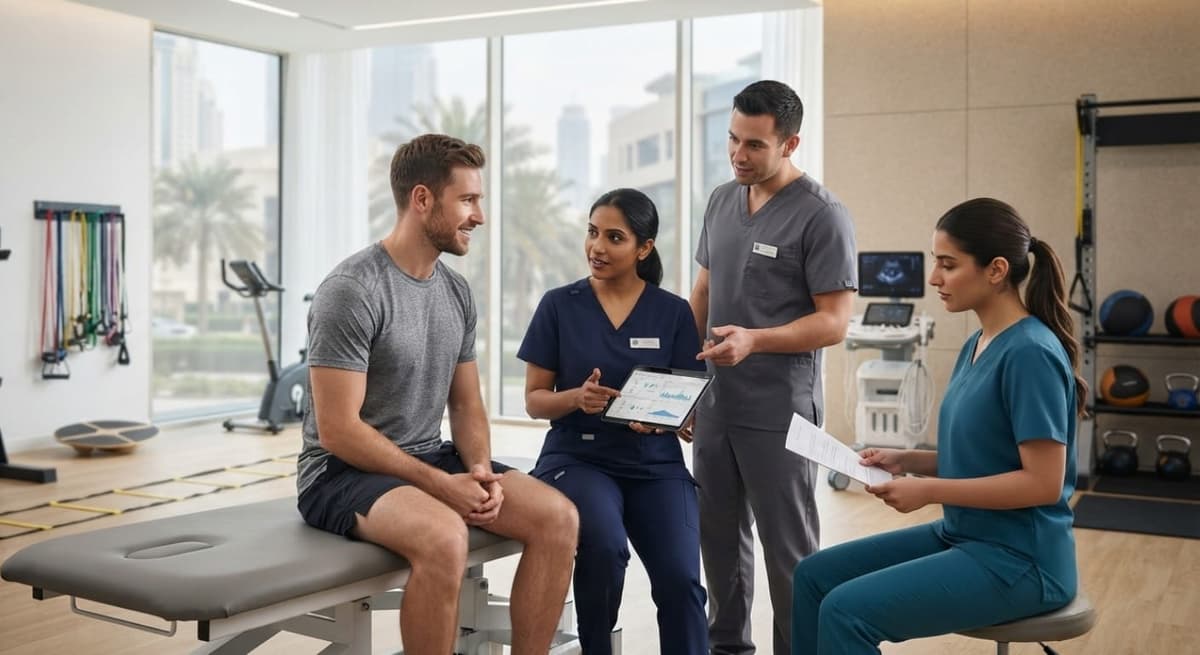
Hop and strength tests guide the return to full training.
Support Services
Insurance is by reimbursement: you pay at the clinic and claim back from your insurer with our itemised invoice.
Frequently Asked Questions
Browse our answers to popular questions regarding Sports Injury Clinic & Physio in Jumeirah 1, Dubai in Dubai.

Content Reviewed by Jeena Mathew
Musculoskeletal Physiotherapy Specialist
BPT, MPT (Physiotherapy) · DHA Licensed Physiotherapist • 8+ Years Clinical Experience
Sports Injury Clinic & Physio in Jumeirah 1, Dubai | RamaCare
Book a sports injury assessment in Jumeirah 1. Open every day 10am–10pm, with same-day appointments when slots are free.
Get In Touch
Call Us
+971 04 286 2006
Chat with us instantly
query@ramacarepolyclinic.com
Clinic Address
12 Al Dhiyafah Rd - Jumeirah Terrace Building,
Ground Floor, Jumeirah 1 - Dubai
Clinic Hours
Request Appointment
DHA Licensed
Certified Facility
Open Daily
10am – 10pm
Personalized Plans
Built Around Assessment
4.8/5 Google Rating
217 reviews
Sports Injury Rehabilitation in Jumeirah 1
Medical disclaimer: this content is for general information and does not replace a personal assessment. Recovery varies from person to person, and no treatment result is guaranteed.