
Post-Surgery Rehabilitation in Jumeirah 1, Dubai
Personalized Post-Operative Physiotherapy & Recovery Protocols
RamaCare Polyclinic provides physiotherapy after surgery done at any hospital, at 12 Al Dhiyafah Road, Jumeirah 1, Dubai. A physiotherapy assessment costs AED 200. We follow your surgeon's protocol after knee or hip replacement, ACL reconstruction, shoulder, spine and fracture surgery, and send progress reports to your surgeon on request. X-ray and a GP are in the same step-free, ground-floor clinic. Open every day, 10am–10pm.
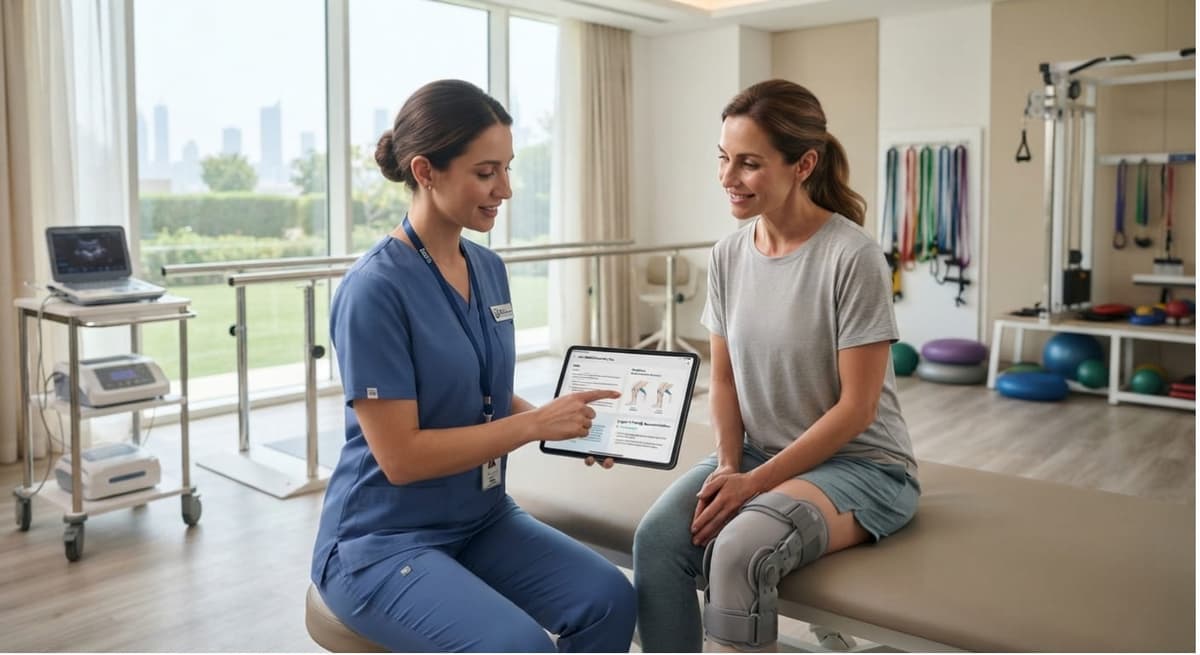
Physiotherapist assisting a patient after knee replacement surgery to rebuild strength.
Bridging the Gap Between Surgery & Recovery
Objective Protocol
Guided by your operating surgeon's specific timelines and weight-bearing instructions.
Active Recovery
Restoring normal biomechanics to prevent joint compensation and stiffness.
DHA-Licensed Care
Physiotherapy administered by certified professionals in Jumeirah.
Understanding Post-Surgery Recovery
Surgery addresses the structural problem — a torn ligament, a worn joint, a fractured bone — but the body still needs guided support to heal properly and regain full function.
This is why rehabilitation is such an important part of recovery. Without it, many people are left with stiffness, weakness or a slower return to the activities that matter to them.
Rehabilitation after surgery serves several essential purposes: preventing complications like blood clots or excessive scar tissue, restoring movement that naturally decreases during recovery, reducing post-operative pain, and helping patients regain the independence to manage daily tasks without assistance. Each of these goals requires a structured, professionally guided approach rather than simply "waiting it out."
At RamaCare Polyclinic, our physiotherapy team works closely with your surgical history and your surgeon's recommendations to build a rehabilitation plan suited to your specific procedure, healing stage, and personal goals — whether that's walking comfortably again, returning to work, or getting back to sport.
"Time and rest are enough to heal after surgery."
Many assume recovery happens automatically on its own. However, muscles go unused and weaken quickly, while joints naturally stiffen and form restrictive scar tissue.
Structured input is required for optimal loading.
To heal in a way that supports full, lasting function, tissue needs progressive, safe loading. This is why rehabilitation is standard for orthopedic and sports surgeries.
What Is Post-Surgery Rehabilitation?
Post-surgery rehabilitation is a structured, progressive physiotherapy process designed to restore movement, strength, and function following an operation. It bridges the gap between the surgical procedure itself and a full return to normal activity.
Why Rehab Matters
Rehabilitation matters because surgery, while addressing the underlying structural issue, often results in temporary muscle weakness, joint stiffness, and reduced confidence in movement — all of which need deliberate, guided attention to resolve properly. Left unaddressed, these effects can persist well beyond the expected healing time.
Structured Phases
The goals of physiotherapy after surgery typically include reducing pain and swelling, restoring range of motion, rebuilding strength, retraining movement patterns, and ultimately supporting a safe return to daily activities or sport. These goals are pursued in a specific sequence, often described as recovery phases, that respects how surgical tissue actually heals.
Surgeon Collaboration
Following your surgeon's protocol is essential throughout this process. Surgeons provide specific guidance based on the exact procedure performed — weight-bearing restrictions, movement precautions, or timelines for introducing certain exercises — and rehabilitation at RamaCare is always coordinated with these instructions rather than working independently of them.
Why Rehabilitation Is Important After Surgery
Structured rehabilitation after surgery helps you:
Conditions We Help After Surgery
We provide rehab after these operations, wherever your surgery was done:
Knee Replacement
Restoring range of motion, strength, and walking ability following total or partial knee replacement.
Hip Replacement
Rebuilding strength and mobility while respecting hip precautions during early recovery.
ACL Reconstruction
A structured, sports-focused rehabilitation pathway supporting return to pivoting and cutting activities.
Meniscus Surgery
Restoring knee function and protecting the joint surface during recovery.
Rotator Cuff Repair
Carefully progressed shoulder rehabilitation respecting tissue healing timelines.
Shoulder Arthroscopy
Restoring shoulder mobility and strength following minimally invasive shoulder procedures.
Spine Surgery
Supporting safe movement and core stability following spinal procedures.
Disc Surgery
Guided rehabilitation to restore function while protecting the surgical site.
Fracture Fixation
Restoring strength and movement following surgical repair of broken bones.
Ligament Repair
Rebuilding joint stability after surgical ligament reconstruction.
Tendon Repair
Carefully staged loading to protect healing tendon tissue while restoring function.
Sports Surgery
Sport-specific rehabilitation supporting a safe, confident return to competition.
Foot & Ankle Surgery
Restoring walking mechanics and lower limb function.
Hand Surgery
Fine motor and functional rehabilitation to support daily tasks and work activities.
Surgery at Another Hospital? Rehab Here
Most of our post-surgery patients had their operation elsewhere in Dubai or abroad. Bring your discharge summary and your surgeon's rehab protocol. We follow it, and on request we send progress reports to your surgeon. The clinic is on the ground floor with step-free access and parking nearby, which matters on crutches or with a walker. We do not offer home visits.
Warning Signs After Surgery
- • Calf pain, swelling or redness in the leg (possible blood clot)
- • Chest pain or sudden breathlessness: call 998
- • Fever, or a wound that is red, hot, swollen or leaking
- • New numbness, weakness or pain that is quickly getting worse
These need your surgeon or emergency care straight away, not physiotherapy.
Scar Tissue After Surgery
Once the wound has fully healed, gentle scar massage, stretching and regular movement help keep the scar soft so it does not limit the joint. Therapeutic ultrasound may be used alongside exercise. Your physiotherapist shows you how and when to start.
Quick Facts
- Address: Ground floor, Jumeirah Terrace Building, 12 Al Dhiyafah Road, Jumeirah 1, Dubai (step-free)
- Physiotherapy assessment: AED 200
- Open every day, 10am to 10pm
- X-ray and GP in the same clinic; progress reports to your surgeon on request
- Insurance: coverage check and prior approval by RamaCare; pay and claim with our documents (see physiotherapy insurance)
- Book: 04 286 2006 or WhatsApp 056 659 7878
العلاج الطبيعي بعد العمليات في جميرا 1، دبي: تقييم بـ 200 درهم، مفتوح يومياً حتى 10 مساءً.
Symptoms That May Require Rehabilitation
Certain signs after surgery suggest that structured physiotherapy would be beneficial:
If you're noticing any of these signs, a rehabilitation assessment can help identify the right next steps.
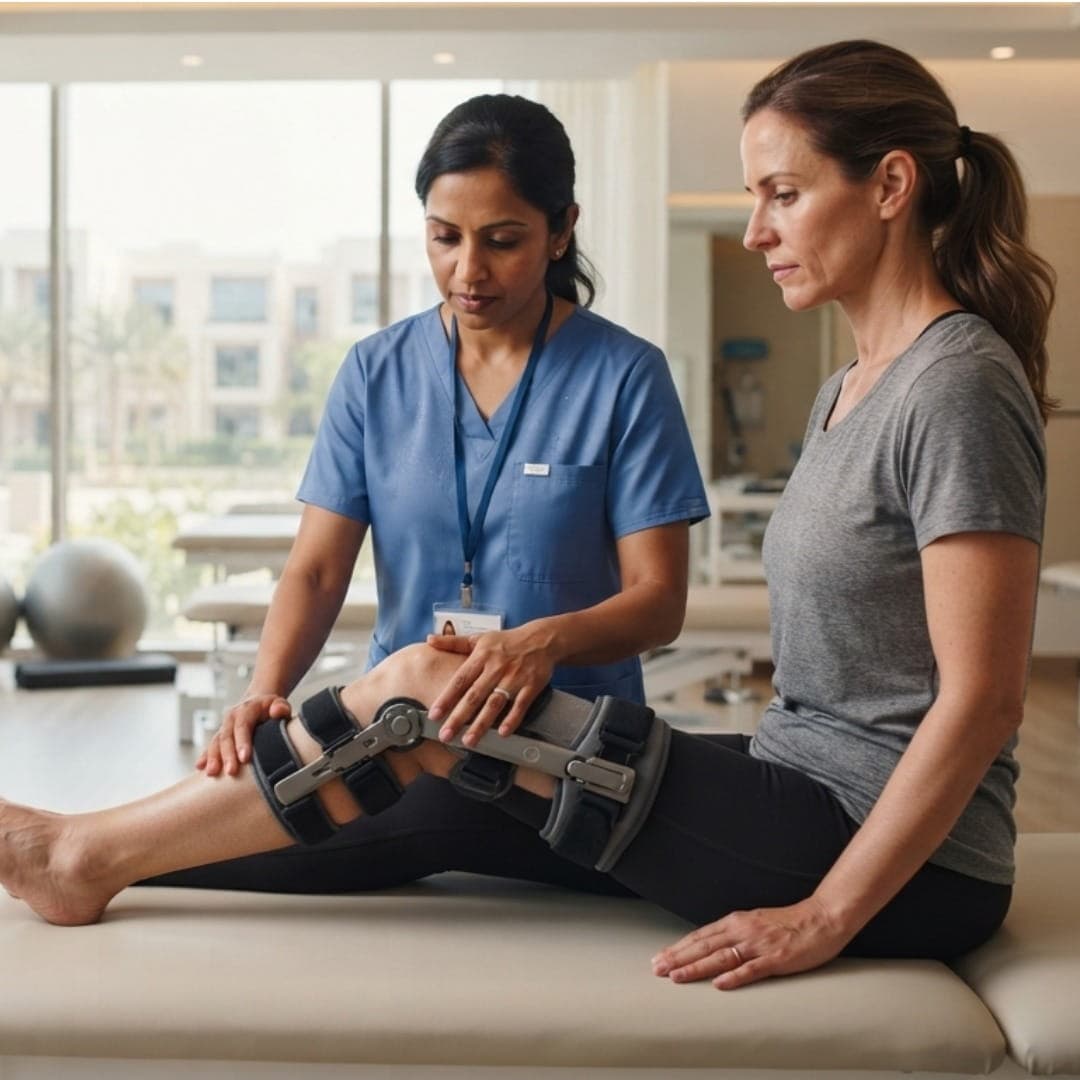
Post-operative rehabilitation exercises at RamaCare, Jumeirah 1.
Our Assessment Process
A thorough assessment ensures your rehabilitation plan is built around your actual surgical history and current condition, not a generic template. At RamaCare, this typically includes:
Medical history review
Understanding your overall health background.
Surgical report review
Examining details of the procedure performed.
Surgeon protocol review
Aligning rehabilitation with your surgeon's specific recommendations.
Pain assessment
Understanding current pain levels and patterns.
Range of motion testing
Measuring joint mobility against expected recovery milestones.
Muscle strength assessment
Identifying areas of weakness needing focused attention.
Functional movement testing
Assessing how you move as a whole.
Walking assessment
Reviewing gait mechanics and any compensatory patterns.
Goal setting
Establishing clear, personalized recovery targets together.
This assessment isn't a one-time event. As your recovery progresses, your physiotherapist will periodically reassess your range of motion, strength, and function to confirm your rehabilitation plan is still matched to where you actually are in the healing process, adjusting the pace or focus of treatment as needed rather than following a fixed schedule regardless of progress.
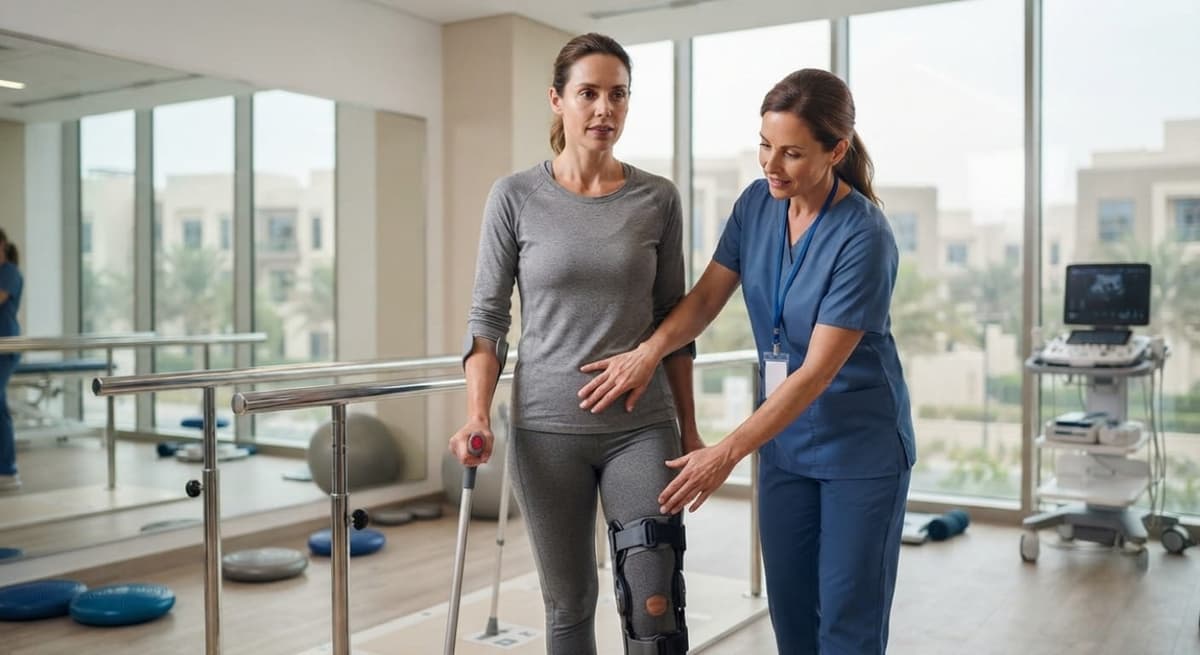
Gait training session during post-surgery rehabilitation in Dubai.
Post-Surgery Rehabilitation at RamaCare
Every programme is built around your procedure, healing stage, surgeon's protocol and goals. It may include:
Every rehabilitation plan is personalized according to five key factors: your surgery type, your current healing stage, your pain level, your functional goals, and your broader medical history — ensuring the program fits you specifically, not a generic post-surgical template.
What a Personalised Rehab Plan Looks Like
No two recovery plans at RamaCare look identical, because no two patients arrive with the same combination of surgery, healing progress, and goals. A footballer recovering from ACL reconstruction and an office worker recovering from spine surgery will follow very different exercise progressions, timelines, and functional targets, even if both plans share the same underlying phase-based structure.
Physiotherapy Techniques Used
Your physiotherapist chooses from these techniques, based on your surgery and healing stage:
Manual Therapy
Hands-on techniques to reduce pain and improve joint and soft tissue mobility.
Joint Mobilization
Gentle, graded movement techniques to restore normal joint mechanics.
Therapeutic Exercise
Targeted exercises designed to restore strength, flexibility, and control.
Strength Training
Progressive resistance work to rebuild muscle lost during surgery and immobilization.
Stretching
Techniques to restore flexibility and reduce post-surgical stiffness.
Balance Training
Exercises to rebuild stability, particularly important after lower limb procedures.
Gait Training
Restoring normal, efficient walking mechanics after surgery affecting the legs or spine.
Neuromuscular Re-education
Retraining the connection between muscles and the nervous system for coordinated movement.
Electrotherapy
Supporting pain relief and muscle activation.
Ultrasound Therapy
Therapeutic ultrasound for soft tissue and scar areas, used together with exercise.
Dry Needling
Addressing muscular tightness and trigger points where appropriate.
Kinesio Taping
Support and feedback for joints and muscles during early rehabilitation.
Scar Mobilisation
Gentle massage and movement once the wound has healed, to keep the scar soft and mobile.
Soft Tissue Release
Reducing muscle tension and improving tissue mobility around the surgical area.
Functional Training
Practicing real-world movements relevant to daily life, work, or sport.
These techniques are combined in a sequence that matches your healing stage.
Rehabilitation Timeline
Select a recovery phase below to view its clinical focus.
Phase 1: Pain Control
The initial priority is managing pain and swelling while protecting the surgical site during early healing.
Typical Recovery Times After Common Surgeries
A general guide only. Your surgeon's instructions always come first.
| Surgery | Rehab usually starts | Typical return to daily activities |
|---|---|---|
| Knee replacement | Within days | About 3 months; strength keeps improving for up to a year |
| Hip replacement | Within days | About 3 months, following hip precautions |
| ACL reconstruction | Within days | Daily life in weeks; pivoting sport usually 6 to 12 months, after testing |
| Rotator cuff repair | After a protected period set by your surgeon | Several months; full strength can take longer |
| Meniscus surgery | Within days | A few weeks to a few months, depending on the repair |
| Fracture fixation | As your surgeon allows weight-bearing | Varies by bone and fixation |
| Spine surgery | As advised by your surgeon | Varies by procedure |
Conditions Commonly Treated
Our clinical protocols are built to safely and progressively restore full capability for these primary post-operative scenarios:
ACL Surgery
Rehabilitation focuses on restoring knee stability, quadriceps strength, and confidence in pivoting movements, typically following a structured multi-month protocol before return to sport.
Knee Replacement
Early rehabilitation emphasizes regaining range of motion and walking ability, followed by progressive strengthening to support long-term joint function.
Hip Replacement
Rehabilitation respects specific hip precautions in early recovery while progressively rebuilding strength and normal walking mechanics.
Shoulder Surgery
Whether following rotator cuff repair or shoulder arthroscopy, rehabilitation carefully progresses from protecting the repair to restoring full shoulder function.
Spine Surgery
Rehabilitation focuses on safe movement patterns, core stability, and gradual return to daily activities while protecting the surgical site.
Fracture Surgery
Rehabilitation restores strength and movement in the affected limb, addressing any stiffness or weakness from the period of immobilization.
Sports Surgery
A sport-specific rehabilitation pathway supports athletes in safely returning to training and competition.
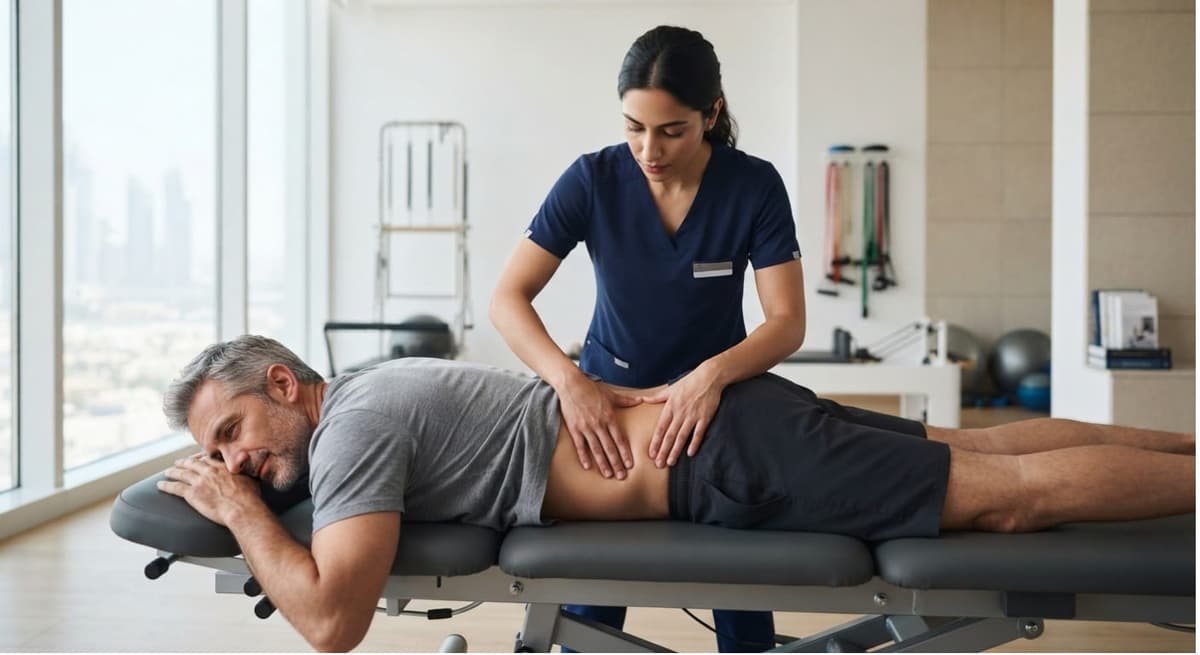
Manual therapy session during shoulder surgery rehabilitation.
Benefits of Early Rehabilitation
Starting rehabilitation promptly after surgery, as guided by your surgeon and physiotherapist, offers meaningful advantages:
Home Care Tips After Surgery
Supporting your rehabilitation between clinic visits makes a meaningful difference to your overall recovery:
These habits matter just as much as your clinic-based sessions. Rehabilitation is most effective when it's treated as a continuous process rather than something that only happens during appointments — the small, consistent choices you make at home between sessions often determine how smoothly and quickly your recovery progresses.
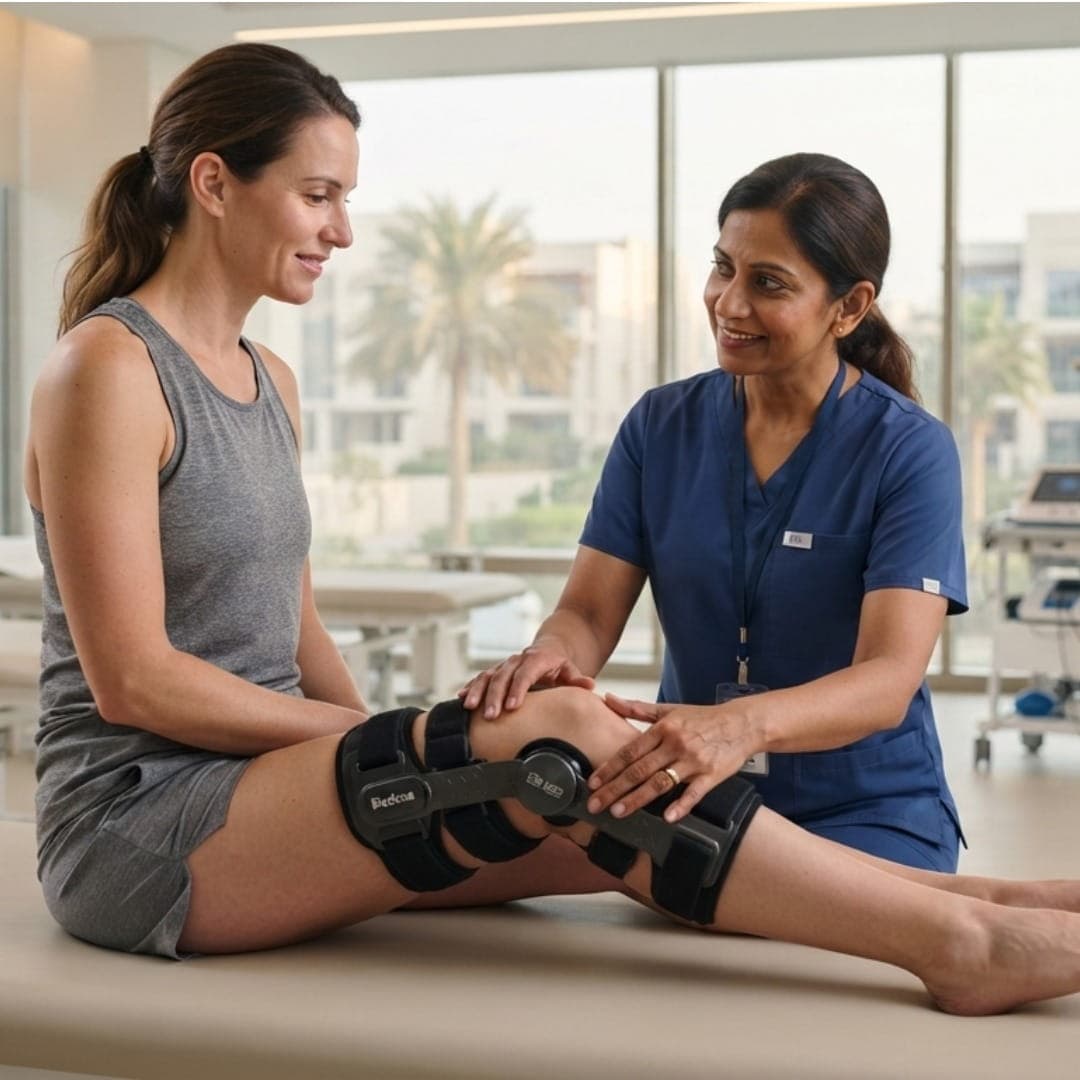
Personalized post-surgery rehabilitation consultation with a DHA-licensed physiotherapist.
Why Choose RamaCare for Post-Surgery Rehab in Jumeirah 1?
Post-Surgery Rehab in Jumeirah 1: Common Questions
Browse our answers to popular questions regarding post-surgery rehabilitation.
Post-Surgery Rehabilitation in Jumeirah 1, Dubai | RamaCare
Get back to comfortable, independent movement with evidence-based post-surgery rehabilitation care at RamaCare Polyclinic.
Get In Touch
Call Us
+971 04 286 2006
Chat with us instantly
query@ramacarepolyclinic.com
Clinic Address
12 Al Dhiyafah Rd - Jumeirah Terrace Building,
Ground Floor, Jumeirah 1 - Dubai
Clinic Hours
Request Appointment
DHA Licensed
Facility 2036418
AED 200
Physiotherapy Assessment
Any Hospital
Surgery Done Elsewhere Welcome
Open Daily
10am – 10pm
Meet Your Physiotherapist and GP
Post-surgery rehab at RamaCare is led by Jeena Mathew, a DHA-licensed physiotherapist (BPT, MPT), with our GP for X-ray, medication where appropriate and referrals.

Jeena Mathew
BPT, MPT (Physiotherapy)
Musculoskeletal Physiotherapy
8+ Years ExperienceKey Expertise
- Back Pain & Sciatica: Manual therapy and strengthening
- Neck Pain: Joint mobility and posture advice
- Shoulder & Knee Pain: Rehabilitation
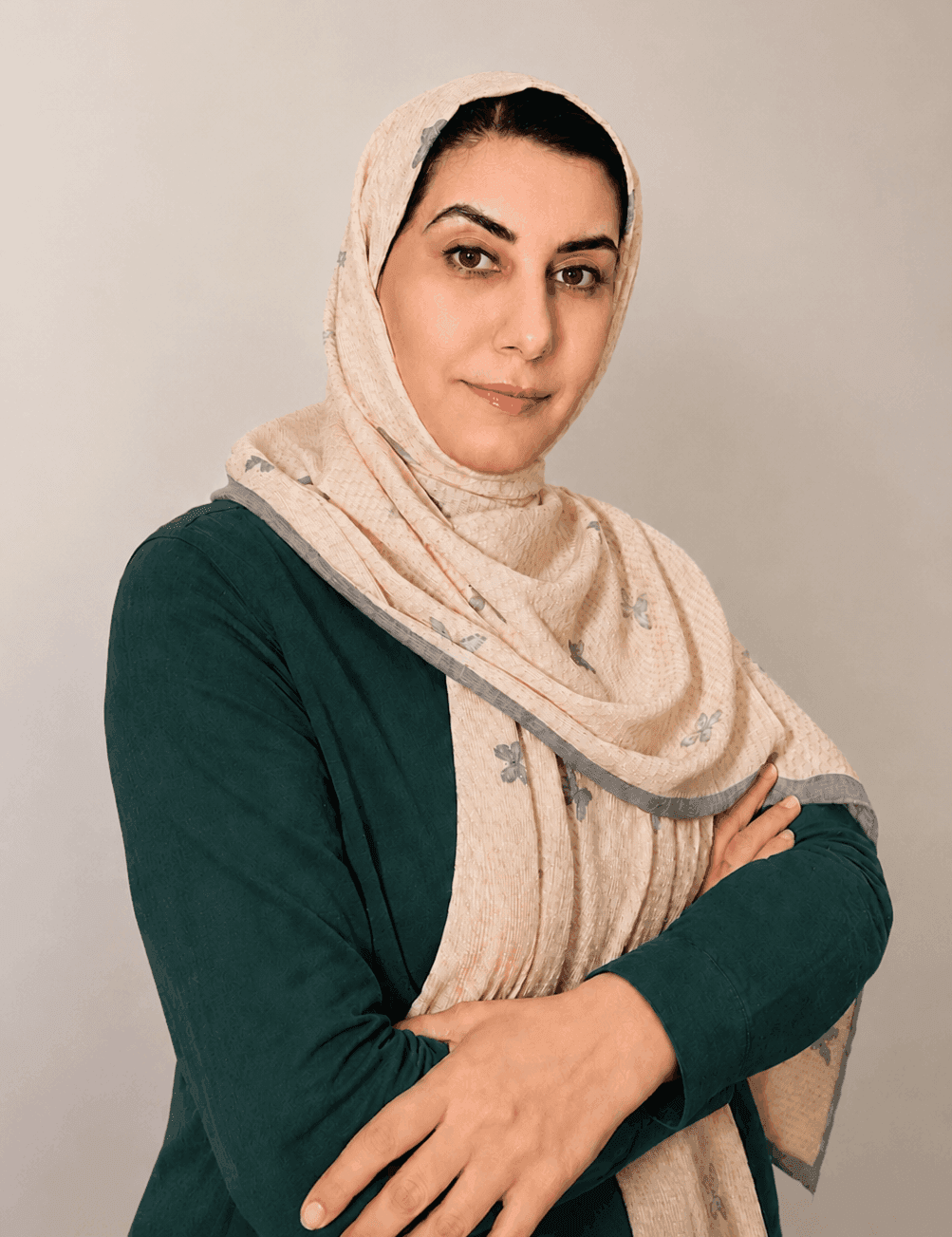
Dr. Sahar Zomorrodi
DHA-Licensed General Practitioner | Diploma from American Aesthetic Academy
General Practice & Aesthetic Medicine
14 Years Experience | DHA LicensedKey Expertise
- Holds a diploma from the American Aesthetic Academy
- Skilled in non-surgical cosmetic procedures, skin rejuvenation, and anti-aging treatments
- Committed to delivering safe, personalized, and results-driven care
Conclusion
If you're preparing for surgery or recovering from a recent procedure, don't leave your recovery to chance. Book your rehabilitation assessment with RamaCare Polyclinic today and take the next step toward a confident, complete recovery.
Medical Disclaimer: This content is provided for general informational purposes only and does not constitute medical advice. Recovery timelines vary considerably from patient to patient depending on the type of surgery, individual health factors, and adherence to rehabilitation. This content is not intended to replace guidance from your operating surgeon or a personalized assessment from a qualified healthcare professional. Please consult a DHA-licensed physiotherapist or physician at RamaCare Polyclinic, in coordination with your surgeon, for an individualized rehabilitation plan.
Related Treatments & Services
Explore other specialized physiotherapy and rehabilitation services available at RamaCare Polyclinic:
Clinical Reference Guidelines
Our treatment guidelines are aligned with global standards and resources established by leading health organizations:
- World Health Organization (WHO) — post-surgical recovery and rehabilitation guidance
- American Physical Therapy Association (APTA) — post-operative rehabilitation standards
- American Academy of Orthopaedic Surgeons (AAOS) — orthopedic surgery and recovery information
- NHS — post-surgical physiotherapy guidance
- Mayo Clinic — post-operative recovery information
- Cleveland Clinic — orthopedic rehabilitation resources

Content Reviewed by Jeena Mathew
Musculoskeletal Physiotherapy Specialist
BPT, MPT (Physiotherapy) · DHA Licensed Physiotherapist • 8+ Years Clinical Experience